
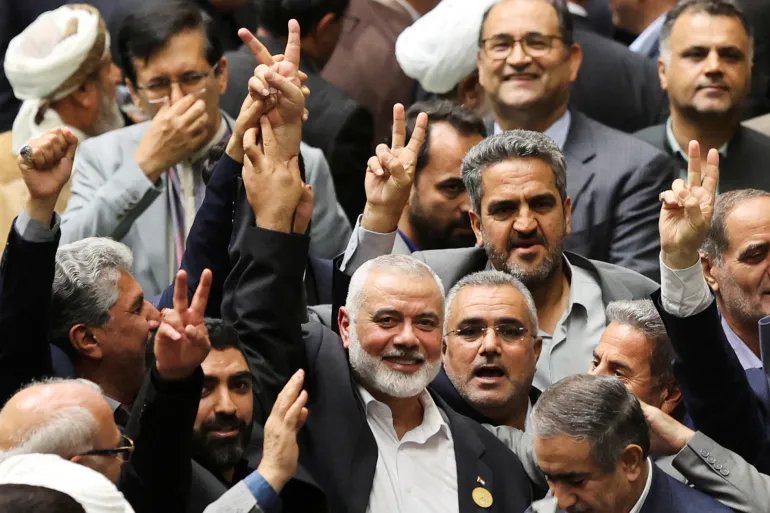
The recent assassination of Ismail Haniyeh, the political chief of Hamas, in Tehran has sent shockwaves through the Palestinian territories and the broader Middle East. According to Hamas, Haniyeh and one of his bodyguards were killed during a strike on their residence early Wednesday morning. The group has squarely blamed Israel for what they term a “treacherous Zionist raid.”
While Israel has not officially claimed responsibility for the assassination, Prime Minister Benjamin Netanyahu hinted at a series of “crushing blows” delivered to Iran’s proxies, which include Hamas and Hezbollah, in recent days. His comments suggest a growing resolve to eliminate threats from these groups amid the ongoing conflict, which has resulted in significant casualties in Gaza.
The assassination of Haniyeh, a key figure in Hamas and a prominent leader in Palestinian politics, is likely to have profound repercussions. His death has ignited anger in Palestine and raised fears of a broader regional conflict, particularly given the current volatility following nearly ten months of war in Gaza. Reports indicate that at least 39,445 Palestinians have lost their lives due to the conflict, alongside extensive injuries to over 91,000 individuals.
The incident has been met with outrage from various factions within Palestine, with Haniyeh viewed as a moderate leader capable of negotiating peace. His leadership has been pivotal in seeking ceasefire discussions, making his assassination a significant blow to potential diplomatic efforts in the region. Observers note that his popularity among Palestinians stems from his background in a refugee camp and his representation of the displaced populations who have suffered for decades.
Iran’s Islamic Revolutionary Guard Corps (IRGC) confirmed the strike on Haniyeh’s residence, labeling it an act of aggression that would have “harsh consequences.” Supreme Leader Ayatollah Ali Khamenei vowed retribution against Israel, amplifying fears of escalation.
The geopolitical landscape is further complicated by ongoing tensions in Lebanon, where skirmishes between Israel and Hezbollah have intensified. This recent escalation in violence raises concerns about the stability of the region, with analysts warning of a potential spillover effect into other neighboring countries.
In contrast, countries such as Qatar and Egypt, which have previously mediated between Hamas and Israel, expressed concerns that Haniyeh’s assassination could derail any ongoing ceasefire talks or efforts for a prisoner exchange. U.S. Secretary of State Antony Blinken has maintained that Washington was unaware of the strike, highlighting the need for continued dialogue amidst rising tensions.
As the aftermath of Haniyeh’s death unfolds, the implications for Gaza and the wider region are profound. With calls for revenge from Hamas’s armed wing, the Qassam Brigades, the potential for an escalation of hostilities could destabilize the already fragile peace in the Middle East.