
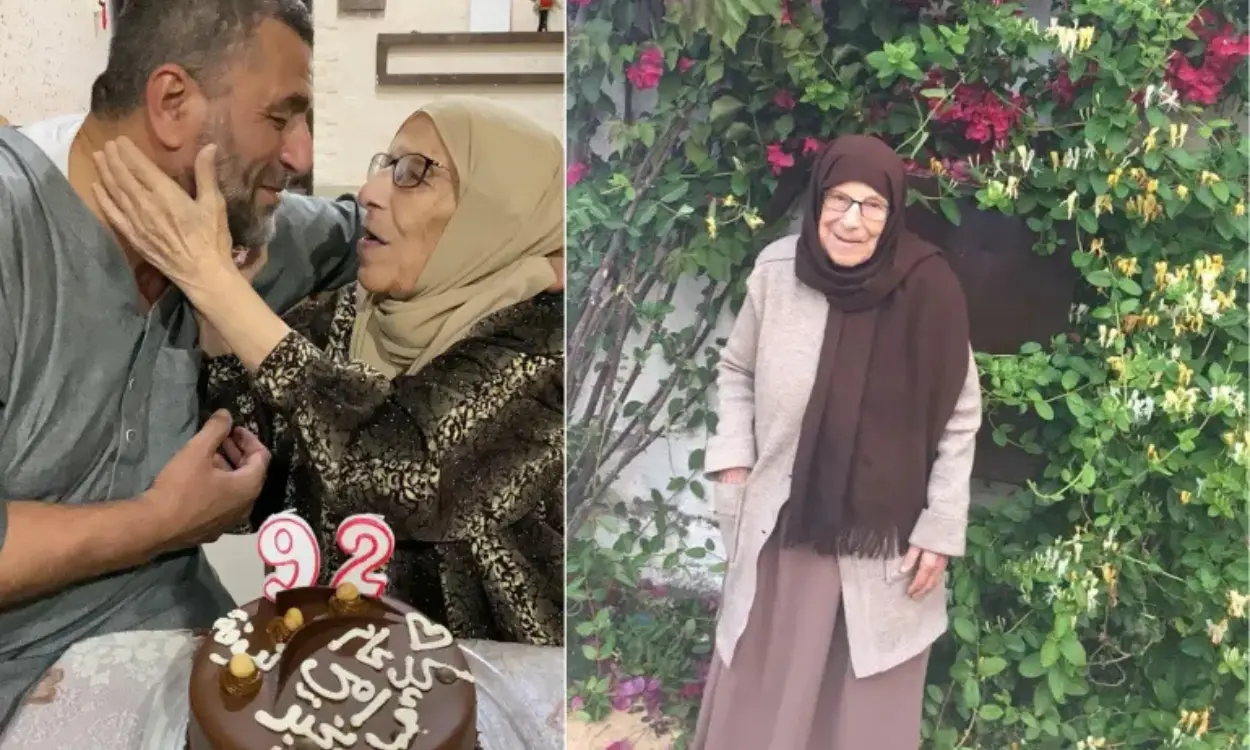
The Ahli Arab Hospital in Gaza City became a scene of horror as the stench of death filled the air. Amidst the chaos, Naifa Rizq al-Sawada’s relatives searched desperately for the 92-year-old matriarch, who had gone missing following an Israeli raid on their home.
Naifa’s family discovered charred bone fragments days later, believed to be hers, and buried her next to her deceased son.
“Despite the pain, we were grateful and happy that we found her and gave her a proper burial ourselves,”
said her daughter, Maha al-Nawati.
Witnesses described a night of terror on March 20 as Israeli forces targeted their neighborhood. Ayman Ayyad, Naifa’s grandson, recalled,
“It was a night of horror.”
The military’s assault extended to their building, forcing separation between men and women and leaving Naifa behind due to her inability to walk unassisted.
Despite initial hopes that Naifa was evacuated, the family faced challenges in obtaining information. Over 7,000 cases of missing persons were reported to the International Committee of the Red Cross (ICRC) amid chaos. Sarah Davies, an ICRC spokesperson, noted the overwhelming number of requests for help.
Human Rights Watch director Farida Deif stressed the responsibilities of Israel under international law to protect civilians, particularly vulnerable individuals like Naifa. She called for an independent investigation into the circumstances of her death, emphasizing the “disregard for Palestinian life” evident in the conflict.
As Naifa’s family mourns their loss, they are left seeking answers.
“I want the world to see what happened to us,”
a relative expressed.
“From what I’m seeing, there is no justice on this Earth.”
The story of Naifa Rizq al-Sawada reflects the broader humanitarian crisis faced by many in Gaza, where violence and chaos have left countless families searching for lost loved ones amid despair.