
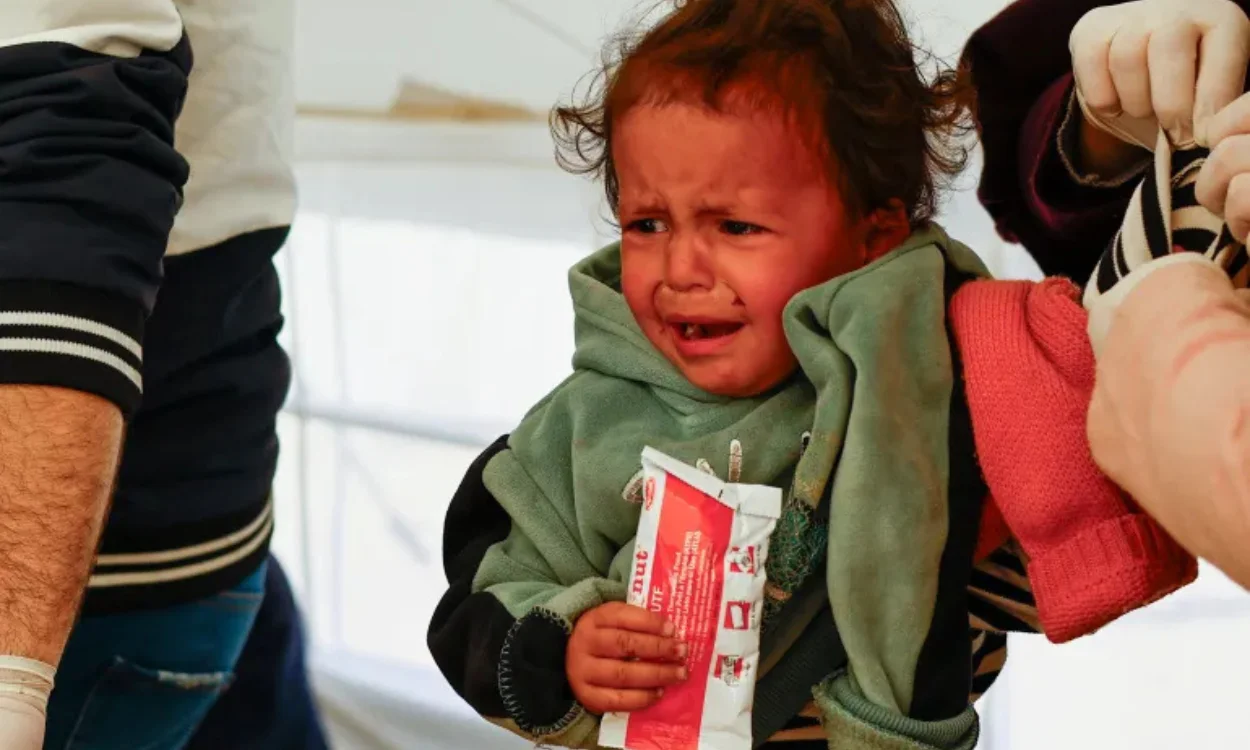
A recent report from the United Nations children’s agency, UNICEF, has exposed the devastating impact of the ongoing conflict in Gaza, stating that “about 90 percent of children in Gaza lack nutrition and face severe threats to their survival, growth, and development.” Published on Thursday, the report underscores the “catastrophic impact” of Israel’s military actions on the enclave, leading to the “collapse” of food and health systems.
The UNICEF report reveals that between December 2023 and April 2024, one in ten children in Gaza survived on “two or fewer food groups per day.” In February alone, an alarming 65 percent of children were fed diets consisting of “only one or no food groups,” a significant increase from previous months. This escalating situation has led to what UNICEF describes as “an appalling escalation in nutrition deprivation.”
Despite claims from Israeli officials that there are no limits on humanitarian supplies for civilians, the reality on the ground suggests otherwise. With pockets of famine emerging, children are reportedly dying from malnutrition and dehydration. Even Israel’s closest allies have started to urge for greater access to food aid, highlighting the urgent need for humanitarian intervention.
The report emphasizes the role of military action in destroying food systems and imposing severe restrictions on the import of essential goods. As a result, millions of Palestinians in Gaza are deprived of the food, water, and fuel necessary for survival.
The report, titled Child Food Poverty: Nutrition Deprivation in Early Childhood, examines food poverty in 100 countries, revealing a stark global reality: more than one in four children under the age of five lives in “severe” food poverty, equating to over 180 million children at risk of long-term developmental issues. The situation is particularly dire in Gaza and Somalia, where conflict and natural disasters exacerbate food shortages.
“It is shocking in this day and age where we know what needs to be done,” stated Harriet Torlesse, one of the report’s lead authors. UNICEF asserts that children must consume foods from at least five of the eight food groups defined by the World Health Organization (WHO) to meet the minimum dietary diversity for healthy development.
UNICEF chief Catherine Russell warned that children consuming just two food groups per day are up to 50 percent more likely to experience severe malnutrition. Malnutrition not only threatens immediate health but also hampers educational attainment and economic potential, perpetuating cycles of poverty across generations.
As UNICEF calls for increased humanitarian aid and improved social services, the report sheds light on a growing crisis that demands urgent global attention. The lives of countless children in Gaza hang in the balance, necessitating immediate action to avert a worsening catastrophe.